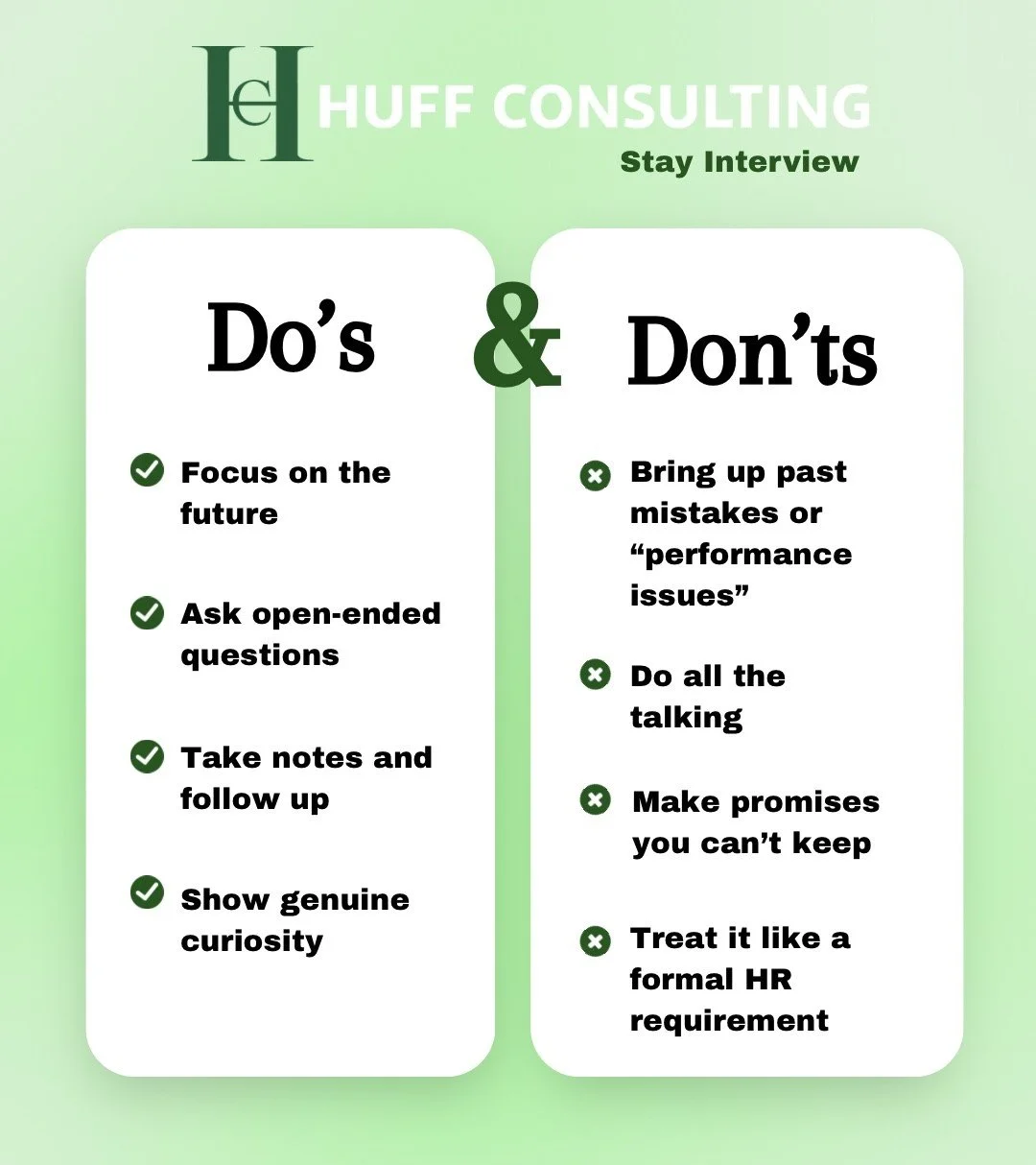
The Death of the Annual Review: Why the “Stay Interview” is the Future of Work
For decades, the corporate world has been tethered to a specific ritual: the annual performance review. Once a year, managers and employees sit across from one another to discuss goals set twelve months prior, revisit mistakes made in the distant past, and assign a numerical grade to a human being’s contribution.
However, in the modern workplace, this tradition is quickly becoming a relic. We are witnessing the "Death of the Annual Review," and in its place, a much more effective tool is emerging: The Stay Interview.
The Problem with Looking Backward
The primary flaw of the annual review is that it is a "post-mortem" exercise. It looks backward at performance that has already happened and events that cannot be changed. In a fast-paced economy, waiting a full year to give feedback is like a pilot waiting until the end of a flight to check the fuel gauge.
Furthermore, these reviews often create a "check-the-box" culture. Because they are tied to pay raises and rankings, they tend to be stressful and defensive rather than helpful. When employees feel they are being judged on their past, they are less likely to be honest about their future. This is why many high-performers quit shortly after a review—not because the review was bad, but because the conversation happened too late to address their actual needs.
The Rise of the Stay Interview
Forward-thinking companies are shifting their focus from evaluating the past to preserving the future. This is the essence of the Stay Interview. Unlike an exit interview—which asks an employee why they are leaving after they’ve already checked out—a Stay Interview is a proactive conversation with your current team. It asks a simple, powerful question: "What will it take for you to stay with us for the long haul?" This shift represents a move from a "manager-as-judge" mindset to a "manager-as-coach" mindset. It acknowledges that in 2026, the best talent has choices, and the burden is on the organization to remain an attractive place to work every single day, not just during bonus season.
How the Stay Interview Works
The beauty of the Stay Interview lies in its simplicity. It doesn’t require complex HR software or a ten-page form. It requires a 20-minute conversation built on trust. Effective Stay Interviews focus on four key pillars:
Connection: Understanding what the employee enjoys most about their work and their team.
Friction: Identifying the small, daily frustrations that lead to burnout if left unaddressed.
Growth: Mapping out where the employee wants to go and ensuring the company is providing the path to get there.
Safety: Creating a space where an employee can say, "I’m feeling bored," or "I’m being scouted by a competitor," without fear of losing their job.
Why It’s a Better Business Strategy
Beyond the "feel-good" aspect of supporting employees, this evolution is a cold, hard business necessity. The cost of losing a key employee is staggering—often totaling twice their annual salary when you factor in recruitment, onboarding, and lost productivity. By replacing the annual review with regular Stay Interviews, companies create a "continuous feedback loop." They can spot trends, fix cultural issues in real-time, and pivot their strategy based on the actual capabilities of their people.
A New Chapter for Leadership
The death of the annual review isn't about removing accountability; it's about increasing engagement. It’s about recognizing that a company’s greatest asset isn’t its technology or its brand—it’s the people who show up every morning. If you want to keep your best people, stop grading them on what they did last year. Start asking them what they need to stay next year. The companies that master the art of the Stay Interview won't just survive the "Great Renegotiation"—they will lead it.
The Stay Interview
January 22, 2026 | Article